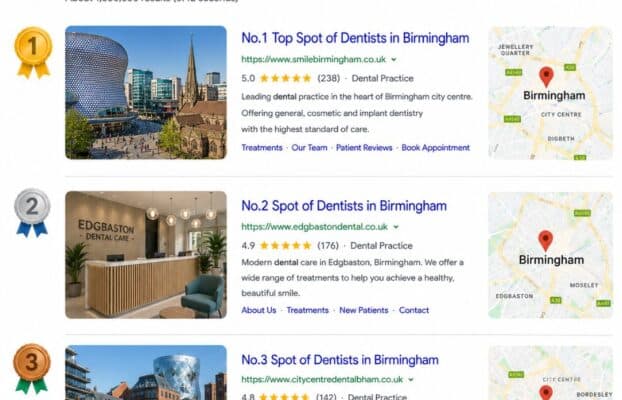
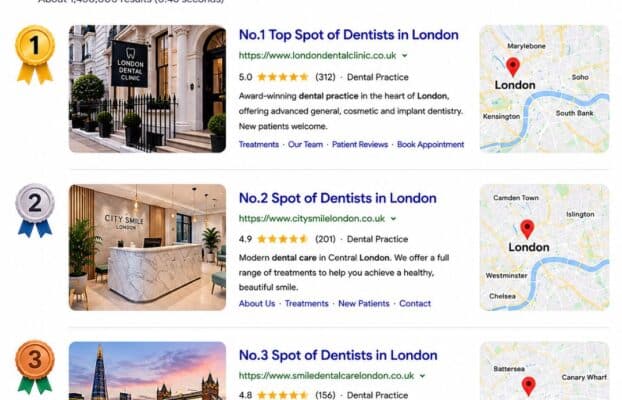
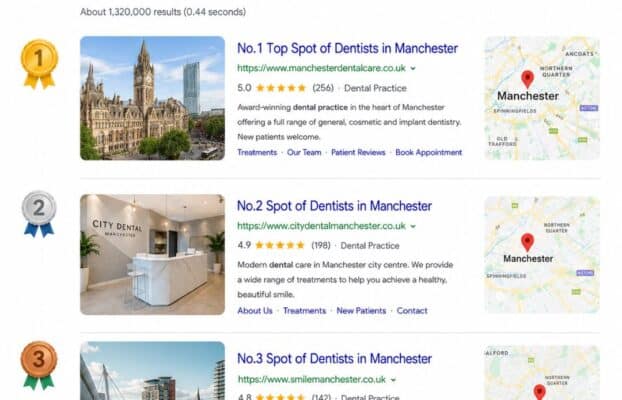
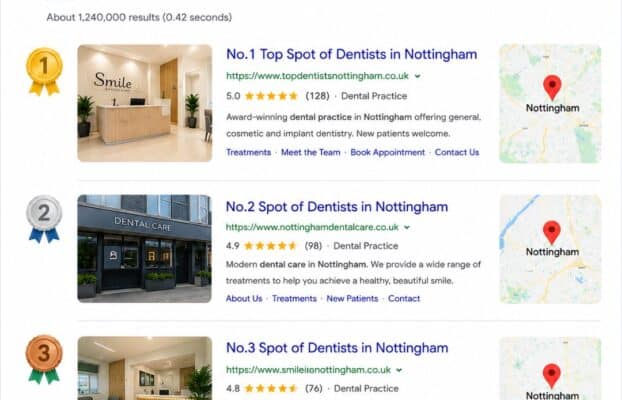
Search is changing for dentists. Patients searching for dental treatment in 2026 are no longer only seeing traditional Google results. They are also encountering AI-generated answers, Google AI Overviews, Gemini-powered search results, AI Mode-style experiences, and answer engines such as ChatGPT and Perplexity. These AI-led search systems can summarise information, answer questions, and recommend services before patients ever click onto a website.
For dental practices, visibility is no longer just about ranking on page one of Google. It is also about being understood, trusted, referenced, and surfaced by AI-led search experiences. This shift creates a new challenge and a new opportunity. The practices that adapt early to these changes may gain a significant visibility advantage over those that wait.
This is where Dental GEO - Generative Engine Optimisation for dentists - becomes important. Dental GEO is the process of preparing your practice's online presence so that AI search systems can accurately understand who you are, what treatments you offer, where you are based, and why patients should trust you.
01.What is Dental GEO?
Dental GEO stands for Generative Engine Optimisation, and we do it specifically for dental practices which we've been working with for the last 8 years. It is the process of improving a dental practice's online presence so that AI search engines, answer engines, and generative search results can better understand who the practice is, what treatments it offers, where it is based, and why patients should trust it.
Think of traditional Dental SEO as helping your website rank higher in Google's organic search results. Dental GEO, by contrast, helps your practice become more understandable, trustworthy, and cite-able to AI systems that generate answers rather than simply list links.
When a patient asks an AI search system a question such as "Who are the best dentists near me for dental implants?", the AI does not simply return a list of ranked websites. Instead, it may generate a conversational answer that includes specific practice names, treatment information, location details, and trust signals. Dental GEO helps position your practice to be included, referenced, or recommended in those AI-generated responses.
02.Why Dental GEO matters for dentists in 2026
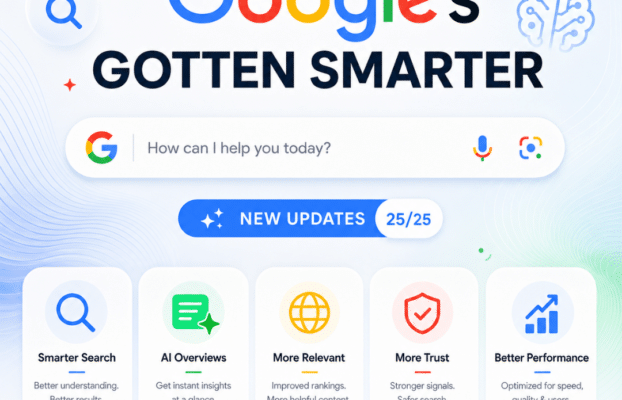
AI-generated search results can have a significant effect on how patients discover and choose dental practices. Google's AI Overviews and Gemini-powered search experiences can appear prominently in search results, often presenting information in a visually distinct format that draws user attention before they reach traditional organic listings or sponsored ads.
Depending on the search query, Gemini snippets frequently come before Google Ads, which you pay thousands of pounds for every month! The key point for dentists is that AI Overviews do not eliminate other visibility opportunities - they add a new layer to the search experience that practices must now consider.
Here's how this affects dental practices in simple terms:
- Patients may get answers before clicking onto a website. If a patient searches "How much do dental implants cost in London?", an AI Overview might summarise pricing ranges, treatment steps, and even mention specific practices - all before the patient clicks through to any website. If your practice is not referenced, you may lose the opportunity to be considered.
- Traditional organic rankings may not be enough. Ranking in positions 1–3 on Google used to guarantee visibility. Now, if an AI Overview appears above those results and does not reference your practice, your visibility may be reduced even if your ranking remains strong.
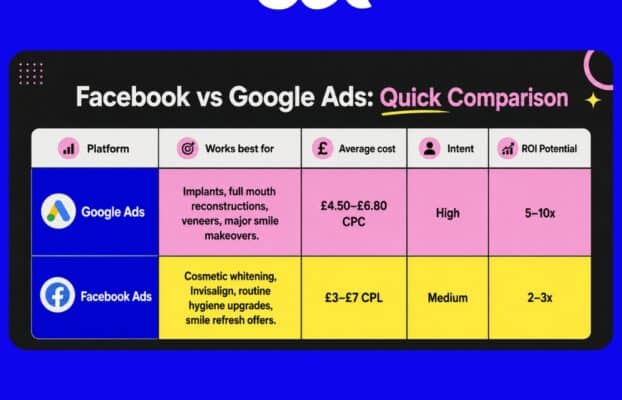
- Paid ads are still useful, but they are no longer the only route to visibility. Google Ads for dentists remain an effective way to reach high-intent patients. However, AI Overviews and answer engines create additional visibility opportunities that cannot be purchased through ads alone.
- Practices with clearer, more trusted online signals may have a better chance of being included in AI-generated answers. AI systems prioritise sources that demonstrate expertise, authority, and trustworthiness. Practices with strong local SEO signals, consistent information, positive reviews, and clear service pages may be more likely to be referenced.
- Local trust, reviews, service clarity and topical authority matter more than ever. AI search systems rely on structured, clear, and credible information. Practices that invest in these areas strengthen their chances of being surfaced by AI-generated search experiences.
03.How GEO differs from SEO
SEO (Search Engine Optimisation) and GEO (Generative Engine Optimisation) are related but distinct. SEO focuses on improving website visibility in traditional search rankings. GEO focuses on improving the chances of being understood, referenced, cited, summarised, or recommended by AI-generated search systems.
Both are important. The strongest digital marketing strategies for dentists in 2026 combine traditional Dental SEO with forward-looking Dental GEO to cover the full spectrum of search visibility.
Traditional Dental SEO vs Dental GEO
Rank higher in Google's organic search results.
Be understood, referenced, and cited by AI search systems.
Traditional search engine results pages.
AI Overviews, ChatGPT, Perplexity, Gemini, and answer engines.
Keywords, meta tags, backlinks, and technical SEO.
Structured data, clear service descriptions, natural language content, and E-E-A-T signals.
Website appears in top organic search results.
Practice is mentioned, summarised, or recommended in AI-generated answers.
Rankings, organic traffic, and click-through rate.
Brand mentions in AI responses, referral signals, and topical authority.
Backlinks, domain authority, and content depth.
Expertise, authoritativeness, trustworthiness, practitioner credentials, and reviews.
Google Business Profile, local citations, and postcode-based rankings.
Consistent name, address and phone details, structured location data, and clear service areas.
Patient searches, sees your listing, then clicks through to your website.
Patient searches, AI answers their question, and your practice may be referenced in the answer.
Key takeaway: The strongest strategy uses both SEO and GEO together.
Is your dental practice ready for AI search in 2026?
Our Dental GEO service helps practices prepare for the next stage of search without losing sight of proven SEO fundamentals. We focus on clarity, authority, and trust signals that work across both traditional search and AI-generated experiences.
Learn about Dental GEO04.2026 updates shaping AI search, GEO and SEO
AI search is evolving rapidly. Several significant updates in 2025 and early 2026 have changed how search engines present information and how patients discover dental practices. Here are the key developments dentists should understand:
Google AI Overviews and AI Mode
Google's AI Overviews are designed to help users quickly understand information from multiple sources without needing to visit individual websites. According to Google Search Central documentation, AI Overviews use Google's large language models to generate summaries and answers directly in search results. These can appear for informational queries, how-to questions, and comparison searches.
Google's AI Mode, introduced in late 2025 and expanded in early 2026, provides a more conversational, exploratory search experience. AI Mode allows users to ask follow-up questions, refine their searches, and receive more contextual answers. For dental practices, this means patients can now have multi-turn conversations with Google's search AI, asking questions such as "What are dental implants?", "How much do they cost near me?", and "Which practices near me offer payment plans?" in a single session.
Ads and AI Overviews
A common question from dental practices is whether paid ads can appear alongside AI Overviews. Ads may appear above, below, or within AI Overviews where they are eligible and relevant to the search query. This means that Google Ads remain a viable visibility strategy even as AI Overviews become more prominent.
Zero-click search behaviour
AI-led search is increasing what the industry calls "zero-click" behaviour - where users get answers directly in the search results without clicking through to a website. Industry research from sources such as Semrush and Similarweb suggests that a significant portion of Google searches now result in zero clicks, particularly for informational and question-based queries.
For dentists, this means that even if your website ranks well, patients may get the information they need without visiting your site. The challenge is ensuring that when AI systems do provide answers, they reference your practice as a trusted, local option.
Entity understanding, topical authority, and E-E-A-T
Search engines and AI systems are moving towards entity understanding rather than keyword matching. As explained in Google's documentation on creating helpful content, the focus is now on content that demonstrates experience, expertise, authoritativeness, and trustworthiness (E-E-A-T).
For dental practices, this means:
- Experience: Content written by practising dentists with real clinical experience.
- Expertise: Clear credentials, qualifications, and specialisations.
- Authoritativeness: Recognition from professional bodies, patient reviews, and industry mentions.
- Trustworthiness: Consistent information, transparent pricing, secure website, and positive reputation signals.
AI search systems use these signals to determine which sources to reference when generating answers. Practices that invest in building strong E-E-A-T signals may have a better chance of being cited by AI-generated search results.
Conversational search queries
Patients are increasingly using natural language, conversational queries when searching. Instead of typing "dentist London implants", they might ask "Which dentists near me in London are good for dental implants and offer payment plans?". According to research from Search Engine Journal and Search Engine Land, conversational queries are growing as users become more comfortable with voice search and AI assistants.
Dental GEO helps practices optimise for these longer, more natural queries by creating content that answers questions in a clear, conversational way.
Growth of answer engines: ChatGPT and Perplexity
AI-powered answer engines such as ChatGPT (with web search capabilities) and Perplexity are becoming popular alternatives to traditional search engines. These platforms provide direct, conversational answers to user queries and often cite sources. For dental practices, being mentioned or recommended by these answer engines can drive referral traffic and build brand awareness.
While dental practices cannot directly control whether ChatGPT or Perplexity references them, they can improve their chances by ensuring their online presence is clear, authoritative, and well-structured. This is where our Dental GEO service helps practices prepare their digital presence to be better understood and referenced by these AI systems.
05.Recent AI and Google search impacts for dentists
The table below summarises recent search changes and their specific impacts on dental practices. Each entry includes what happened, how it affects dentists, what practices should consider, and a credible source reference.
Recent AI and Google Search Impacts for Dental Practices
The following developments are reshaping how dental practices appear in search results. Each represents a shift from traditional SEO toward AI-mediated visibility, requiring practices to adapt their online presence accordingly.
Google AI Overviews
AI-generated summaries now appear for many informational queries. For dentists, this means patients may receive answers without visiting your website. Practices not referenced in AI Overviews lose visibility even with strong organic rankings.
Ads in AI Overviews
Google Ads may appear above, below, or within AI Overviews where eligible. Paid search remains viable for dental practices, though placement varies by query.
Zero-Click Search
More searches result in zero clicks as users get answers directly in results. Strong rankings no longer guarantee traffic. Dental practices must optimise for featured snippets, Google Business Profile, and brand mentions in AI-generated content.
Conversational Search & Answer Engines
Patients use longer, natural language queries. Answer engines like ChatGPT and Perplexity provide conversational responses with citations. Dental practices need FAQ pages, natural language content, and structured service pages to be discovered.
E-E-A-T & Local Signals
Search prioritises Experience, Expertise, Authoritativeness, and Trustworthiness. For dentists, this means showcasing credentials, maintaining complete Google Business Profiles, earning quality reviews, and demonstrating local relevance.
Dental practices often ask whether they should invest in Google Ads or Dental GEO. The answer is usually both. Google Ads and Dental GEO serve different purposes and work best when used together as part of a comprehensive dental marketing strategy.
Google Ads vs Dental GEO
Immediate. Ads can appear within hours.
Gradual. Authority and AI visibility build over weeks and months.
Pay-per-click. You pay every time someone clicks.
Upfront investment in content, SEO and reputation building, with no per-click cost.
Visibility stops when you stop paying.
Builds compounding authority and long-term visibility.
Patients know ads are paid placements, and some prefer organic results.
Being referenced by AI or ranking organically may carry stronger trust signals.
Filling short-term diary gaps, launching services, and targeting high-value treatments.
Building long-term visibility, authority, and AI search readiness.
Key takeaway: The strongest dental marketing strategies combine both paid search and organic/GEO optimisation together.
09.Why dentists should act now
AI search is still developing. Google AI Overviews, ChatGPT, Perplexity, and other AI-powered search experiences are evolving rapidly. The systems that power these platforms are learning, adapting, and improving with every query.
This creates an opportunity for dental practices. The practices that start building visibility, authority, and clarity now - while AI search is still maturing - may have a competitive advantage over those who wait. By the time AI search becomes fully established and mainstream, the early adopters may already have strong authority signals, clear structured data, and a history of being referenced by AI systems.
Here is why acting now makes sense:
- AI search systems are still learning. The algorithms that determine which practices to cite are not yet fully established. Early investment in Dental GEO may help position your practice as a trusted source before the competition catches up.
- Building authority takes time. E-E-A-T signals, topical authority, and reputation cannot be built overnight. Starting now gives your practice time to accumulate trust signals, quality content, and positive reviews that AI systems can reference.
- Traditional SEO still matters. Dental GEO does not mean abandoning traditional SEO. The best approach is to strengthen your overall digital presence so you are visible across all search channels - traditional Google results, Google Maps, AI Overviews, and answer engines.
- Patient behaviour is changing. Patients are already using ChatGPT, Perplexity, and Google AI Mode to research dental treatments and find local providers. If your practice is not visible in these AI-powered search experiences, you may be losing enquiries to competitors who are.
The practices that adapt early to these changes - without losing sight of proven SEO fundamentals - are likely to be the ones that thrive in the AI-led search landscape of 2026 and beyond.