Home › Insights › Google Ads › Google Ads Has Changed — What Dental Practices Need to Know
Google Ads · Dental Marketing · 10 min read
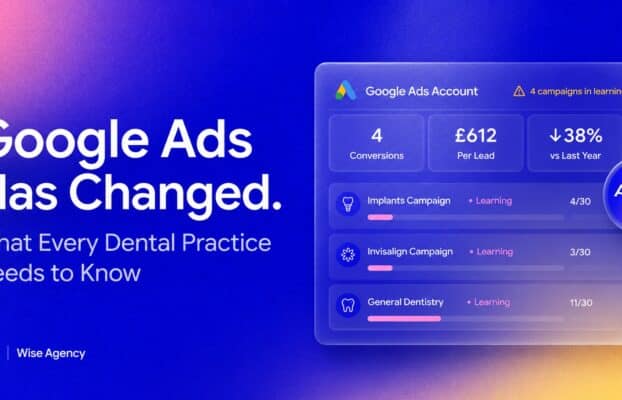
Google Ads Has Changed.
If your dental Google Ads have stopped performing and nobody's given you a straight answer, this is it. Google has fundamentally rebuilt how ads work. Most agencies haven't caught up. Here's exactly what changed, why it broke your campaigns, and what to do before September 2026.
Written by Kieran Standen
Published 26 May 202610 min readFounder · Wise Agency
Something has broken with Google Ads. Not just for one dental practice. All of them. If your campaigns have delivered less and cost more over the past 12 to 18 months, it is not your website, it is not your targeting, and it is not bad luck. The platform has been fundamentally rebuilt around AI and the old way of running things simply does not work anymore.
At Wise, we manage Google Ads across 200+ dental accounts every month. We watched this break in real time. Same pattern, same month, across every account. This is not a theory. It is documented fact combined with real-world dental data.
This guide explains what Google changed, why it broke your campaigns, what the only structure that works looks like now, and what you need to do before September 2026.
02.What Google Actually Changed
For years, Google Ads worked in a way that made sense. You picked your keywords. When someone searched for those words, your ad appeared. If you targeted "dental implants Leicester", you showed to people searching for dental implants in Leicester.
How it works now
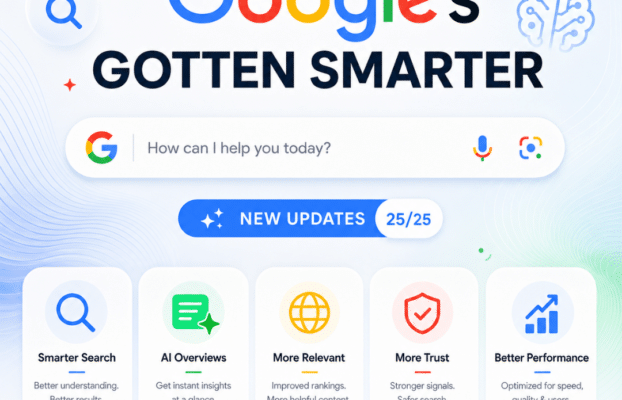
Google's AI now decides what searches your ad is relevant to. Not you. It interprets intent, context and meaning rather than matching words. Your implants ad may now show to people searching for things you never agreed to pay for.
The budget you thought was going to people searching for implants is going to people searching for all sorts. At that point you are not running a marketing campaign. You are donating money to Google.
Why Google's AI isn't as smart as it sounds
AI is not all-knowing. How many times have you put something into ChatGPT and it's fed you a load of convincing nonsense? Google's AI is no different. Your ad budgets with AI Max are being guinea-pigged to a degree. Your campaigns are the data moat Google is testing and building with.
Has your cost per lead been rising?
If your Google Ads have delivered fewer enquiries at a higher cost per lead over the past year, your account is almost certainly affected by these changes. Get in touch and we will tell you exactly why.
Request a Free Audit →
03.The Full Timeline: Five Years of Change
This did not happen overnight. Google has been on a deliberate, multi-year mission to hand more and more control to its AI. Every change was documented. Most agencies just were not paying attention.
Feb 2021
Broad Match Modifier begins merging into Phrase Match
Google announced that BMM keywords would absorb into Phrase Match, quietly expanding what phrase match could trigger.
[1] Google Blog
Jul 2021
Broad Match Modifier killed off entirely
BMM was fully removed across all languages. Phrase match now handled a job it was never designed for. Exact match began allowing close variants.
[2] Google Support
Jul 2024
Broad match becomes the default for all new campaigns
Google changed the default match type for every new Search campaign to Broad Match, confirmed by Google Ads Liaison Ginny Marvin. Combined with Smart Bidding, this became the standard setup.
[3] Search Engine Land · Confirmed by Google Ads Liaison Ginny Marvin
May 2025
Google launches AI Max: keywords become optional
AI Max is a campaign toggle that overrides all match type settings and adds keywordless matching. Instead of using your keywords, it finds searches based on what is on your landing page. Think of it as Dynamic Search Ads built into every campaign.
[4] Google Developer Blog · Google Marketing Live, May 2025
Apr 2026
AI Max exits beta, forced migration confirmed for September 2026
Google confirmed AI Max is out of beta and that Dynamic Search Ads, automatically created assets, and campaign-level broad match settings will all automatically upgrade to AI Max in September 2026. No opt-out.
[5] Google Blog · April 15, 2026
May 2026
Google Marketing Live: "Google Search is AI Search"
At their flagship annual event on May 20, 2026 (this week), Google confirmed the direction publicly and without ambiguity. AI Max is now the centrepiece of all Search advertising. Their exact words: "The only way to win in the age of AI, is with AI."
[6] Google Blog · May 20, 2026
04.The 30 Conversions Rule Nobody Told You About
Here is the part Google never communicated clearly to advertisers. It also explains everything about why dental accounts have been declining.
30
Conversions required per campaign per month
Google's documented minimum to exit the learning phase and begin performing properly. [7]
4–5
Conversions a typical split-budget campaign gets
A £2,500 budget split four ways leaves £600 per campaign. At typical CPC rates, that generates 4 to 5 conversions. Never enough to learn.
∞
Months stuck in learning mode below the threshold
Below 30, the AI does not optimise. It guesses. It keeps guessing indefinitely until it hits 30 or runs out of budget.
What this means for your practice specifically
If you are spending £2,500 per month split across Invisalign, whitening, implants and general dentistry, each campaign is getting roughly £600. That generates 4 to 5 enquiries per month. Not 30.
Google's AI has been guessing every single month. Not optimising. Not learning. Just guessing, and spending your money while it does it. This is why your cost per lead has gone up. This is why enquiry volumes have dropped. It is not bad luck and it is not your website. It is a platform that has been structurally broken for your budget level.
The fix is not spending more money in the same way. The fix is concentrating budget so that at least one campaign hits 30 and the AI can actually start working for you.
05.Old Model vs New Model
The way dental Google Ads was built and managed before 2024 is no longer compatible with how the platform works today.
Topic
The Old Model (Pre-2024)
The New Model (2026 Onwards)
Match Types
Exact = exact. Phrase = phrase. Predictable and controllable.
AI interprets meaning and intent. Broad match is the default. AI Max removes keywords entirely.
Budget Approach
Spread across treatments: implants, Invisalign, whitening, general all running simultaneously.
Concentrated per campaign. Under £5k, general dentistry only. Each high-ticket treatment needs its own budget of at least £2,500.
How the AI Learns
Less reliant on conversion volume. Manual bidding gave agencies more control.
Requires 30 conversions per campaign per month minimum. No data, no performance. The AI guesses until it hits 30 or runs dry.
Who Controls Targeting
The advertiser. You chose the keywords and who saw the ad.
Google's AI. It decides what searches are relevant based on intent, context, landing page content, and user behaviour.
Fewer campaigns. Larger individual budgets. 3-month build phase before high-ticket. Data-led. Compounds over time.
September 2026
Legacy campaigns continue. This option ends.
All legacy campaigns auto-migrate to AI Max. Google rebuilds your account if you do not act first.
06.The Only Budget Structure That Works Now
There is one model that works with how Google's AI currently operates. These are not suggestions. This is the architecture Google requires.
Under £3,000/mo
Foundation Only
General dentistry only
One campaign
Build conversion data
No high-ticket treatments
The AI needs to learn before it can perform. This phase is non-negotiable.
£3,000–£5,000/mo
Foundation + One
General dentistry led
Possibly one mid-value treatment
Still no high-ticket
Data must support the add
Do not add a second campaign until the first consistently exceeds 30 conversions.
£5,000–£10,000/mo
General + High-Ticket
General dentistry as base
Each treatment: £2,500 minimum
Each treatment: own campaign
Implants OR Invisalign first
3-month build per treatment
£2,500 per treatment is the hard floor. Below this the campaign cannot hit 30.
£10,000+/mo
Multi-Treatment
Full treatment portfolio possible
Still: £2,500 per treatment minimum
Months 1–3: data build
Month 4+: layer and scale
Even here, the first three months are about feeding the AI. There is no shortcut.
The 3-month build sequence
Whatever the budget, the sequence is always the same. Month one is general terms, high volume, feeding the machine. Month two you mine the search terms and find the people who searched for implants or Invisalign. Month three you take those real searches and build the high-ticket campaigns around them. That is the only route to an account that actually compounds over time.
07.The September 2026 Deadline
Every legacy Google Ads account gets force-migrated to AI Max.
Google confirmed on April 15, 2026 that Dynamic Search Ads, automatically created assets and campaign-level broad match settings will all automatically upgrade to AI Max in September 2026. No opt-in. No warning. You do not get a vote. When Google rebuilds your account, it is not thinking about your treatment margins, your associate splits, your lab costs or which treatments make you the most money. It is thinking about its own metrics. And it will spend your budget, because that is exactly what it is designed to do.
September
2026
Hard deadline
The practices that restructure before September will do it on their own terms, built around their margins and treatment priorities. The practices that do not act will have Google do it for them. Those are the only two options.
08.The Wise ROI Calculator
The real question is not whether you can afford to spend more. It is what you get back if you do. Use the calculator below to model your numbers — ad spend, CPC, treatment fee, your actual costs — and see the full picture from click to converted patient.
Wise Agency · Dental ROI Calculator
What does your ad spend actually return?
Built around real UK dental practice economics. Enter your numbers and see the full picture from click to converted patient — gross revenue, net profit, break-even and true ROAS.
1
Campaign
2
Economics
3
Results
Campaign inputs
Select your treatment type — this sets realistic CPC and cost benchmarks based on UK market data.
£
£
UK average: £4–£6 CPC (AI Overview benchmark)
%
UK dental average: 7–10%. Good LP: 10–14%
£
Conversion funnel rates
These defaults are based on UK dental industry averages. Adjust if you know your practice figures.
%
%
%
Live funnel estimate
💷
Ad spend
£2,000
÷ CPC
🖱️
Estimated clicks
111
x
8% convert
📋
Estimated enquiries
9
x
35% book
📅
Consultations booked
3
x
75% attend
🦷
Consultations attended
2
x
40% convert
✅
Converted treatment patients
1
💰
Estimated gross revenue
£3,750
📊
Cost per enquiry
£222
🎯
Cost per converted patient
£2,000
Practice economics
UK dental industry defaults applied. Adjust to match your practice structure.
%
%
%
Set to 0 if finance is rarely used
%
£
£
£
Suggested starting point: £300–£700 per converted patient.
Estimated net profit from this campaign
£0
Based on your inputs
Gross ROAS
0x
Revenue returned per £1 of ad spend
Net ROAS
0x
Net profit per £1 of ad spend
Full funnel breakdown
Ad performance
💷 Ad spend
£0
🖱️ Estimated clicks ?
0
📊 Cost per click
£0
Lead generation
📋 Enquiries generated
0
💡 Cost per enquiry
£0
Patient journey
📅 Consultations booked
0
🦷 Consultations attended
0
✅ Converted patients
0
🎯 Cost per converted patient
£0
Where the money goes
Gross revenue£0
Lab / production costs-£0
Associate / clinician cost-£0
Finance provider fees-£0
Discounts / payment plans-£0
Other direct costs-£0
Admin / TCO cost-£0
Gross profit before ad spend£0
Monthly ad spend-£0
Net profit after ad spend£0
Profit margin after delivery
0%
Gross profit as % of revenue (before ad spend)
Cost per converted patient
£0
Ad spend divided by treated patients
⚖️
Break-even point
0 patients
You need 0 converted patients to cover your ad spend.
Lifetime value adjusted return
£0
Includes estimated LTV uplift from repeat visits, hygiene, referrals and future treatment per converted patient.
What this means
Loading...
Want us to model this for your practice?
We will run the numbers using your actual treatment mix, real CPCs from your account and your practice margins. No estimates, no averages.
These figures are estimates based on inputs provided and UK dental industry benchmarks. CPC figures are based on Wise Agency data from 200+ UK dental campaigns (2023–2025). They do not represent guaranteed returns. Actual results vary based on market, campaign quality, landing page performance and practice operations. Wise Agency accepts no liability for decisions made based on this calculator.
09.7 Things to Do Right Now
Ask for conversion volume per campaign
Request the number of conversions per campaign for the last 90 days. If any is below 30 per month, it has been in learning mode. That is not a grey area.
Audit your budget split
If you are spending across more than one or two treatments on under £5,000 a month, the structure needs to change before September.
Request a structural conversation
Not a reporting call. A conversation about whether your current setup is compatible with how Google works in 2026.
Understand your treatment margins first
A proper ROI model, cost per patient acquired against treatment revenue, should sit behind every budget decision from here on.
Restructure before Google does it for you
When Google force-migrates in September, it mirrors your legacy settings. It does not rebuild intelligently around your business.
Confirm each treatment meets the £2,500 floor
If any treatment campaign is below £2,500, consolidate into general dentistry until the budget supports it properly.
Make sure conversion tracking is airtight
Phone calls, form fills, booking completions. The AI only learns from conversions it can see. Broken tracking means your campaigns are invisible to the algorithm regardless of budget.
10.Frequently Asked Questions
Why have my dental Google Ads stopped performing?
Google has fundamentally changed how ads are matched to searches. Exact match and phrase match no longer work the way they used to. Google's AI now decides what your ad is relevant to, and it casts a much wider net than you agreed to pay for. Combined with the 30-conversion requirement, most dental practices on split budgets have been stuck in learning mode for months.
How many conversions does a campaign need to actually work?
Google's own Help Centre documentation states that a campaign needs at least 30 conversions per month to exit the learning phase and begin optimising. Below 30, the AI keeps guessing rather than making informed decisions. It does this indefinitely.
What is Google AI Max?
AI Max is Google's new campaign setting that overrides all match types and adds keywordless matching. Rather than using your keywords, it finds searches based on what is on your landing page. It exited beta in April 2026 and all legacy campaigns will be automatically migrated in September 2026.
What budget does a dental practice need for Google Ads in 2026?
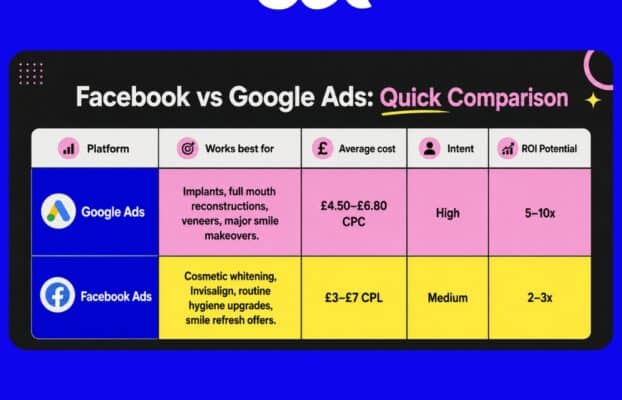
Under £5,000 per month, only general dentistry should be targeted. One focused campaign to build conversion data. Over £5,000, high-ticket treatments like implants or Invisalign can be added, but each requires its own minimum budget of £2,500 to generate enough conversions to exit learning mode.
What happens in September 2026?
Google is force-migrating all legacy ad accounts to AI Max in September 2026. Practices that do not restructure beforehand will have Google rebuild their accounts automatically, with no consideration for treatment margins, costs or patient acquisition goals.
Should I keep running Google Ads for my dental practice?
Yes, but only if the budget and structure are right. Google Ads works very well for dental practices when each campaign has enough budget to hit 30 conversions per month. The problem is not the platform itself. It is running the old model on a platform that has fundamentally changed.
Is your Google Ads account ready for September 2026?
Every dental practice running Google Ads in the UK needs to restructure before September. We will look at your account, check your conversion volumes and build a plan around your actual margins. No fluff. Real numbers.